Menu


A pioneer, including in the area of sustainability
It’s in our DNA to always be one step ahead of the times. We do this through the continuous development of our solutions – but also when it comes to setting new milestones for our climate goals.
Dendrit is committed to climate neutrality
Our Path to a More Sustainable Future
For us, sustainability means taking responsibility – toward our environment, our employees, and future generations. That is why we pursue clearly defined, ambitious goals and measure our progress in a transparent and accountable manner.
Achievements: What We've Already Accomplished
- “Carbon Neutral” certification in accordance with ISO 14068-1 for the fiscal years 2023 and 2024
- Preparation of a comprehensive greenhouse gas inventory in accordance with DIN EN ISO 14064-1, verified in accordance with ISO 14064-3
- Setting emission targets lower than those specified in the climate neutrality pathway
- 100% green electricity at the site for a climate-neutral energy supply
- Reducing emissions across multiple categories through mindful mobility choices, sustainable business travel, and optimized procurement processes
- Close collaboration throughout our value chain – from suppliers to customers
Specific Goals: What We'll Continue to Work On
- Climate neutrality in Categories 1 through 6 by 2035
- Further electrification of our vehicle fleet and transition to green gas
- Continuous reduction of indirect emissions through more sustainable supply chains and digital, resource-efficient processes
- Improving our data transparency to enable even more precise control of emissions
Our goal is clear: We want to get a little better every year – and show that technological progress and climate protection go hand in hand.
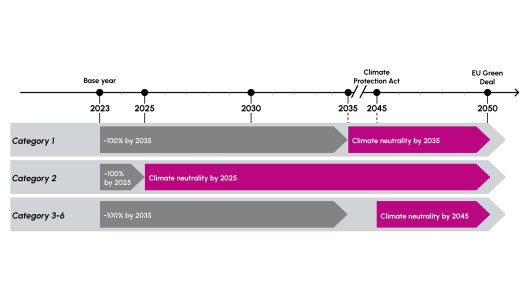
Making sustainability measurable:
Category 1
This includes all direct greenhouse gas emissions resulting from our own activities – for example, the heating systems at our Dülmen facility or our company vehicles.
Category 2
Refers to indirect emissions resulting from purchased energy consumption. We are proud to already be using 100 percent green electricity and thus to be climate neutral in this category.
Categories 3 through 6
Categories 3 through 6 cover additional indirect emissions throughout the entire value chain. These include energy-related activities, transportation, business travel, waste, materials, and other upstream and downstream emissions from products, services, and processes.
Our Achievements and Our Plan
We have already achieved some success: We have been able to reduce our emissions in Categories 1 and 3–6. But we want to achieve even more. In Category 1, we’re working on electrifying our vehicle fleet and are focusing on green gas. In Categories 3 through 6, we’re reducing our carbon footprint through measures such as sustainable hotel stays, promoting environmentally conscious mobility among our employees, and sustainable procurement of materials.
In addition, we are planning further initiatives, such as reducing paper consumption, tracking our emissions in detail, and introducing a carbon neutrality bonus for employees who incorporate sustainable practices into their daily work.
CO₂ Offset Projects
Even though we are consistently reducing our emissions, some CO₂ emissions cannot yet be completely avoided. We offset these residual emissions through certified climate protection projects that meet strict international standards – such as the United Nations’ renowned “Gold Standard” – and result in real, measurable CO₂ reductions.
It is important to us that every project not only protects the climate but also creates environmental, social, and economic benefits for the respective region. In this way, we combine regional responsibility with global impact. For our certifications, we rely on measures that guarantee transparency, credibility, and verifiable climate impact.
We have already completed the following projects:
Biogas Support Program (BSP-Nepal)
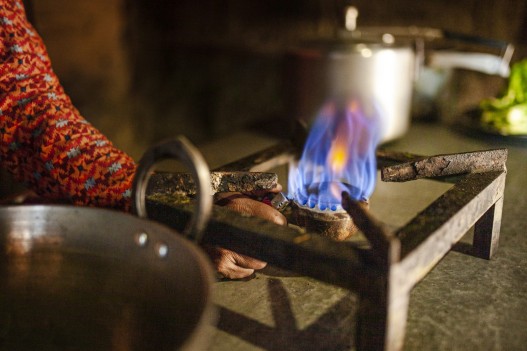
In 2024, we are supporting a climate protection project that brings together several aspects of sustainable development: the Biogas Support Program (BSP-Nepal). This project meets the renowned “Gold Standard” and not only contributes to reducing CO₂ emissions but also improves health, quality of life, and economic prospects in rural regions of Nepal.
At the heart of the initiative is the construction of small biogas plants fueled by livestock manure. These plants replace traditionally used firewood and fossil fuels, thereby significantly reducing greenhouse gas emissions. At the same time, they noticeably improve the living conditions of the participating households: less smoke indoors, a healthier living environment, and valuable time saved on daily firewood collection.
Another advantage: The plants produce organic fertilizer as a byproduct, which replaces chemical alternatives and increases agricultural yields. In addition, toilets can be connected to the system – a significant step toward better hygiene and a higher quality of life.
The program is a nationwide initiative to promote renewable energy that has won numerous awards. It has been successfully implemented for many years and encompasses tens of thousands of biogas plants. Its effectiveness is extensively documented, including through Gold Standard project documentation, which confirms its long-term emissions reductions and contributions to sustainable development.
Fuel Conversion and Energy Efficiency in Brazilian Ceramics Factories
As part of our first “Carbon Neutral” certification, we supported a project focused on the use of biomass and improving energy efficiency in Brazilian ceramics factories.
The measures implemented there reduce CO₂ emissions in two ways:
- by switching from fossil fuels to sustainable biomass
- through more efficient production processes in brick kilns
The project meets the highest international standards and was implemented through our partner, Freeze Carbon. It serves as a prime example of how climate protection and local economic development can be combined: lower emissions, modernized production methods, and a contribution to the region’s sustainable development.
